How is methamphetamine used?
Methamphetamine is usually smoked or injected, but it is sometimes swallowed or snorted.3
Effects of methamphetamine
Use of any drug can have risks. It’s important to be careful when taking any type of drug.
Meth affects everyone differently, based on:
- size, weight and health
- whether the person is used to taking it
- whether other drugs are taken around the same time
- the amount taken
- the strength of the drug (varies from batch to batch)
- the environment (where the drug is taken).
Onset and duration of effects
How fast a drug takes effect and how long it lasts can vary depending on how it's taken - for example, whether it's smoked, injected, swallowed or snorted.
Effects of meth begin almost immediately if injected or smoked, with a slightly more delayed onset if snorted (3 to 5 minutes) or swallowed (15-30 minutes).2, 4
Peak effects occur after around 1-3 hours and can last for up to 12 hours. It may also be hard to sleep for a few days after using meth.2, 7
Effects
Effects can include:
- feeling euphoric and confident
- feeling anxious or agitated
- talking more and feeling energetic
- increased sex drive
- large pupils
- sensitivity to bright lights
- dry mouth
- teeth grinding
- reduced appetite
- fast breathing
- increased body temperature
- dehydration
- itching
- clenched jaw
- fast heartbeat
- increased blood pressure.3, 8, 9
Impact of mood and environment
Drugs that affect a person’s mental state (psychoactive drugs) can also have varied effects depending on a person’s mood (often called the ‘set’) or the environment they are in (the ‘setting’):
- Set: a person’s state of mind, previous encounters with the drug, and expectations of what’s going to happen. For example, feelings of stress or anxiety before using meth may result in an unpleasant experience and make those feelings worse.
- Setting: the physical and social environment where you take meth – whether it’s known and familiar, who you're with, if you're indoors or outdoors, the type of music or sounds, and lighting. The ideal setting to take meth will vary based on the individual and drug they’re using. For example, one person might enjoy meth in a loud social setting like a party while another may prefer a quieter place with close friends.7
Being in a good state of mind, with trusted friends and a safe environment before taking meth reduces the risk of having a bad experience.7
Overdose
If you take a large amount of meth or use a strong batch, you could overdose.
Your risk of overdose can also increase if you mix meth with alcohol or other drugs, including medications.
Methamphetamine overdose can cause death.6
Call triple zero (000) and request an ambulance if you or someone else has any of the following symptoms (emergency services are there to help and can provide more instructions):
Signs of methamphetamine overdose can include:
- unconscious or non-responsive
- spasms or seizures
- heart attack symptoms such as:
- difficulty breathing
- sharp pain/discomfort in chest, arm, shoulder, back, neck, or jaw
- severe agitation, confusion, or panic
- racing heartbeat
- hot, flushed (red), or sweaty skin
- very large pupils.8, 10
Learn more on overdose and drug-related emergencies here.
Mixing with other drugs
Mixing methamphetamine with other drugs can have unpredictable effects and increase the risk of harm.
Mixing includes using more than one drug (including alcohol or medications) at the same time, or one after another. You should also consider what drugs you’ve taken in the last 24 hours.
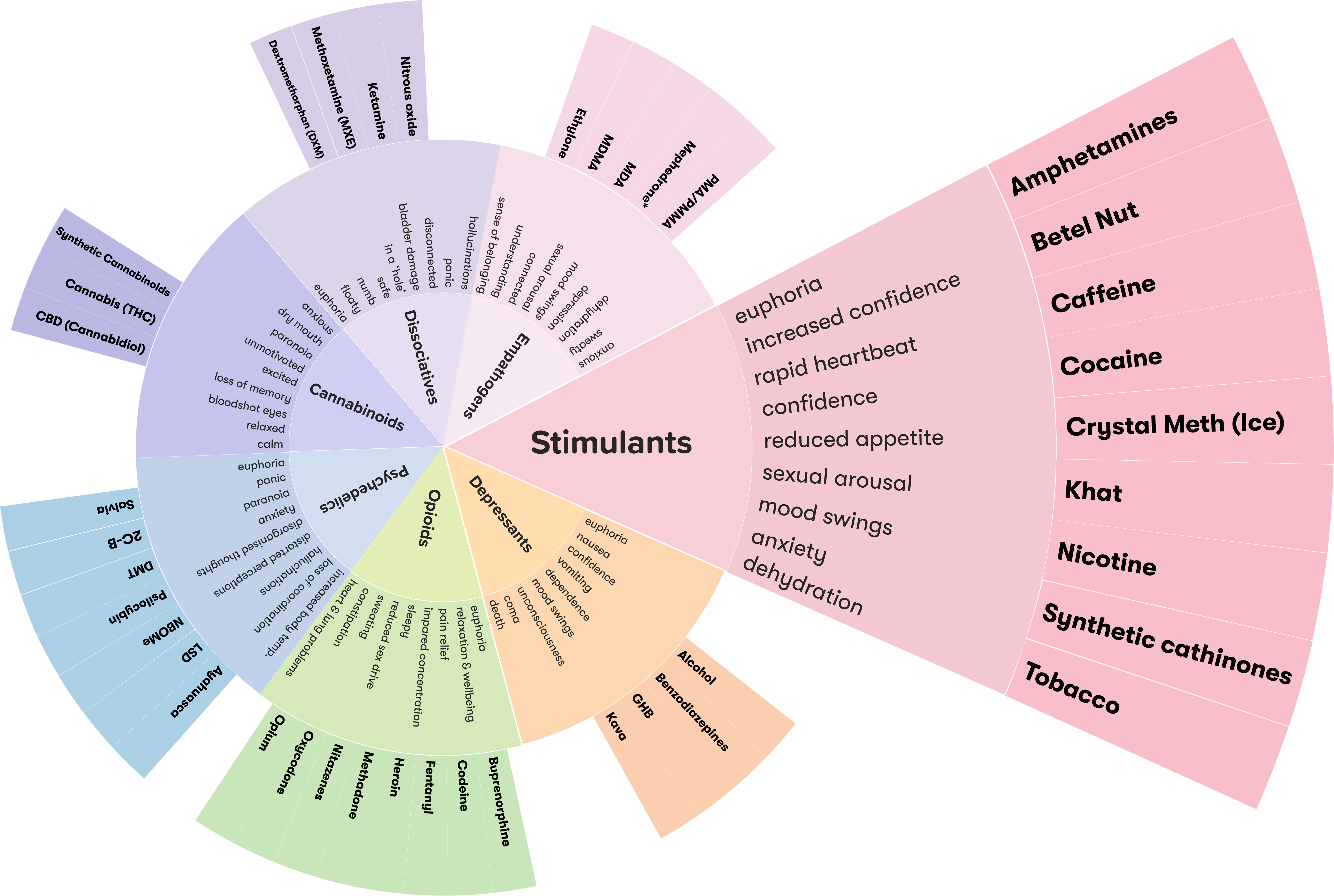
- Methamphetamine and stimulants (such as speed, cocaine, and nicotine): Places extra strain on the heart and increases risk of stroke. May also lead to heightened anxiety.
- Methamphetamine and opioids and depressants (such as alcohol, benzodiazepines, and GHB/GBL): Meth speeds up your heart rate, while depressants/opioids slow it down, masking the effects of each other. Depending on how much you take, you could overdose on either drug if one wears off before the other.
- Methamphetamine and psychedelics (such as psilocybin (magic mushrooms), LSD, and ayahuasca): Using meth while on psychedelics can make the psychedelic effects much more intense, potentially leading to anxiety, paranoia and a more intense/unwanted trip.7, 11, 12
Use of more than one drug or type of drug consumed at the same time is called polydrug use.11
More on Polydrug use
Polydrug use is a term for the use of more than one drug or type of drug at the same time or one after another. Polydrug use can involve both illicit drugs and legal substances, such as alcohol and medications.
Reducing harm
There are ways you can reduce the risk of harm when taking meth:
- Start low, go slow – try a little bit first to see how you feel. Wait at least 30 minutes before deciding whether to take more.
- Stay hydrated by taking small sips of water regularly – to avoid dehydration and overheating.
- Try and eat 20-30 minutes before using – meth can impact your appetite, so it’s good to eat beforehand and also eat every few hours while the effects are ongoing.
- Allow time to recover and sleep – lack of sleep increases the risk of harms from meth.
- Avoid operating machinery, driving, or swimming.6, 13
If snorting:
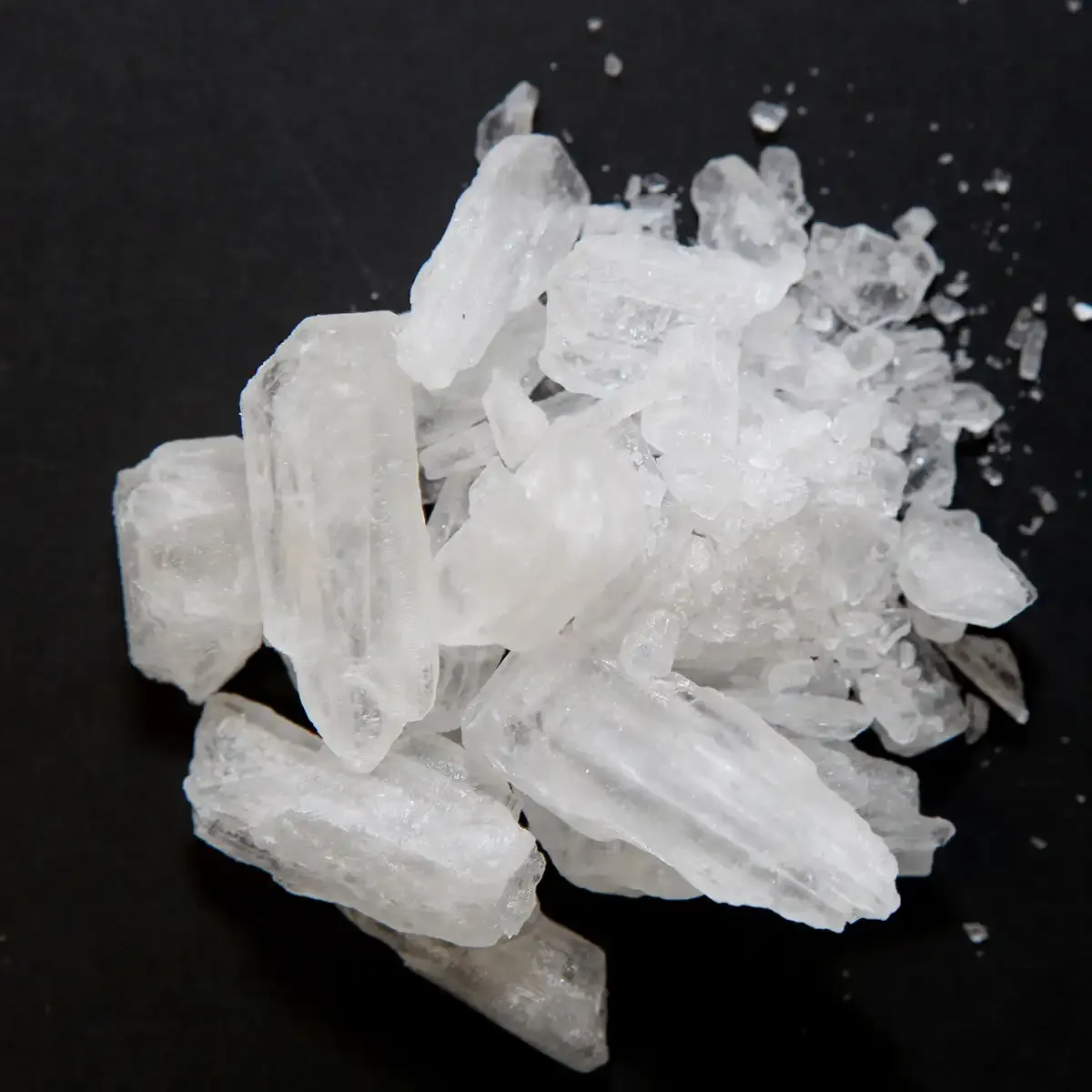
- Crush into a fine powder, as crystals can cause cuts.
- Rinse your nose with water before and after to protect your nose from irritation.
- Use your own straw, or a disposable one, and avoid money notes to reduce the risk of infections or transmission of viruses like HIV or Hep C.
- Switch nostrils and take breaks to avoid nasal damage.13
If injecting:
- Always use new needles – never share needles or other injecting equipment. Use your own spoon/cup and tourniquet. Use new barrels, filters, sterile water, and swabs. Safely dispose of used equipment.
- Visit a needle and syringe program for sterile equipment, disposal of used equipment, and harm reduction advice.12
Heroin found in or sold as meth:
- Start low, go slow – try a little bit first to see how you feel. Wait at least 30 minutes before deciding whether to take more.
- Never use alone, make sure someone nearby has naloxone on hand and a phone to call for help if needed.
- Continue to monitor drug alerts and use drug checking (pill testing) services, where available.
Coming down
It In the days after meth use, you may experience:
- difficulty sleeping and exhaustion
- headaches, dizziness and blurred vision
- paranoia, hallucinations and confusion
- irritability and feeling ‘down’.14, 15
Using drugs such as alcohol, benzodiazepines or cannabis to help with the come down effects may result in a cycle of dependence on both types of drugs.
Learn more about drug comedowns here.
Long-term effects
Long-term effects can vary depending on how much, how often and how you consume methamphetamine. Regular use may eventually contribute to:
- extreme weight loss due to reduced appetite
- restless sleep or insomnia
- dry mouth and dental problems
- regular colds or flu
- trouble concentrating
- breathlessness
- muscle stiffness
- anxiety, paranoia and irritability
- depression
- heart and kidney problems
- increased risk of stroke
- increased risk of drug-induced psychosis.3, 8, 16, 17
Methamphetamine and mental health
Some people who regularly use meth may start to lose enjoyment of everyday activities.
They can get easily stressed and experience mood swings. These changes can lead to longer-term anxiety and depression. These effects can last for several weeks or even months after someone stops using meth.16
Individuals can also develop drug-induced psychosis when using stimulant drugs - like meth - at high doses or for extended periods. This psychological condition is characterised by people experiencing strange beliefs, paranoia, seeing or hearing things that may not be there (hallucinations) and exhibiting unpredictable behaviour.18-20
These symptoms usually disappear a few days after the person stops using meth, but in some cases, they can last longer or be the first sign of a longer-term mental illness like schizophrenia.18-20
Tolerance
Regularly taking meth can lead to developing a tolerance, which means you need to take larger amounts to get the same effects.7
Dependence
People who regularly use meth can become dependent. They may feel they need to use meth to go about their usual activities like working, studying and socialising, or just to get through the day.7
Lung health
Smoking methamphetamine has been associated with a range of lung complications. This includes coughing, wheezing, difficulty breathing and coughing up blood. Smoking methamphetamine may cause or increase the symptoms of asthma. It has also been shown to increase the risk of developing emphysema.11
Withdrawal
Withdrawal refers to the symptoms that can occur when someone who is dependent on a drug, or who has been using it regularly over time, stops or reduces their use.21
Withdrawal can include physical symptoms (such as headaches, or nausea) and psychological symptoms (such as anxiety, or depressed mood).21
Symptoms - including how strong they are and how long they last - will vary depending on the type of drug and a person’s history of use.21
Withdrawal symptoms
Reducing, or stopping using meth after a period of regular use can lead to withdrawal symptoms, including:
- cravings for meth
- increased appetite
- confusion and irritability
- mood swings
- aches and pains
- exhaustion
- restless sleep and nightmares
- anxiety, depression and paranoia
- brain ‘zaps’.21, 22
Withdrawal symptoms should settle down after a week and mostly disappear after a month.21
Pregnancy and breastfeeding
Before pregnancy
Some evidence has shown that meth use could affect male fertility, but it is not conclusive.19, 20
However, it may be best to avoid meth use in the lead up to trying to conceive, or while actually trying.
During pregnancy
Methamphetamine use during pregnancy can affect a baby’s growth and development. Babies exposed to meth during pregnancy may experience:
- lower birth weight
- smaller head size
- lower body length
- behavioural issues
- changes to brain development.23-25
Meth use during pregnancy may also increase the risks of complications, including:
- miscarriage
- premature (early) labour
- bleeding from the site of the placenta after labour
- increased blood pressure
- increased chance of heart attack or stroke.24-28
Overall, pregnancies affected by meth use are more likely to have poorer outcomes for both the pregnant person and the baby. However, some of these risks may be related to other challenges that can occur alongside meth use, including stress, poor nutrition, unstable housing, or limited access to healthcare.26, 28
How meth is used during pregnancy may also affect risk. Injecting meth can increase the risk of blood-borne viruses such as HIV and hepatitis B or C if needles or other injecting equipment are shared. These infections can affect the health of the pregnant person and the baby.29
After pregnancy
If a baby is exposed to meth during pregnancy, they may need to stay in hospital post-birth so doctors can monitor withdrawal symptoms.27
Methamphetamine passes into breastmilk. Continuing to use meth while breastfeeding may pose serious risks to the baby, and death can occur in some instances.28
To reduce risks to the baby, it is recommended to:
- not breastfeed for at least 48 hours after meth use
- express and discard the breastmilk after use (not simply stop breastfeeding)
- have an alternative feeding option available, such as formula
- have a safety plan in place when caring for or feeding a baby, such as having support from another trusted adult.29
Getting help
If your use of methamphetamine is affecting your health, family, relationships, work, school, financial or other life situations, or you’re concerned about someone, there is help and support.
- Call the National Alcohol and Other Drug Hotline on 1800 250 015 for free and confidential advice, information and counselling about alcohol and other drugs.
- Use the confidential Path2Help portal to get matched with information and services specific to your needs.
- Stimulant Treatment Line offers free counselling and support for people who use stimulants, such as methamphetamine (ice), cocaine and ecstasy: 1800 101 188
Path2Help
Not sure what you are looking for?
Try our intuitive Path2Help tool and be matched with support information
and services tailored to you.

Use of methamphetamine (ice) is against the law. Federal and state laws provide penalties for possessing, using, making, selling, importing or exporting, or driving under the influence of methamphetamine.
The importation or exportation and the procuring of precursor drugs (such as pseudoephedrine) with the intention of manufacturing a controlled drug, is also against the law. Laws have been introduced that prevent the sale and possession of ice pipes in some states and territories.30
National
- 5.8% of Australians aged 14 years and over have used meth/amphetamines one or more times in their life.31
- 1.3% of Australians aged 14 years and over have used meth/amphetamines in the previous 12 months. Of these people, 50% report crystal or ice as the main form of meth/amphetamines used.31
Young people
- Young Australians (aged 14–24) first try meth/amphetamines at 20 years of age on average.31
- 2% of 12-17 year olds have ever tried methamphetamines.32
- Australian Government Department of Health and Aged Care. Types of drugs. [Internet]. 2021. [cited 2026 August 10]
- Hi-ground. Methamphetamine. [Internet]. n.d. [cited 2026 Sep 23]
- National Drug and Alcohol Research Centre (NDARC). A quick guide to drugs & alcohol. Third edition ed. [Sydney, N.S.W.]: Drug Info, State Library of NSW; 2017. p. 54-57.
- Campbell A. The Australian Illicit Drug Guide: Every Person's Guide to Illicit Drugs--Their Use, Effects and History, Treatment Options and Legal Penalties [e-book]. Black Inc; 2001 [cited [08.05.2024].
- National Drug and Alcohol Research Centre. Methamphetamine. [Internet]. 2016. [cited 2026 Sep 23]
- Harm Reduction Victoria. Ice. [Internet]. n.d. [cited 2026 Sep 23]
- Psychonaut Wiki. Methamphetamine. [Internet]. 2025. [cited 2026 Sep 23]
- Darke S, Lappin, J. & Farrell, M. The Clinician's Guide to Illicit Drugs. United Kingdom: Silverback Publishing; 2019. p. 32-65.
- Upfal J. Australian drug guide. Ninth edition ed. Collingwood, Vic.: Black Inc.; 2022. p. 56-61.
- Schuckit MA. Drug and alcohol abuse : a clinical guide to diagnosis and treatment [e-book]. 6th ed. New York, NY: Springer; 2006 [cited 2026 August 13].
- Darke S, Lappin J, Farrell M. The Clinician's Guide to Illicit Drugs and Health. Great Britain: Silverback Publishing; 2019.
- Harm Reduction Victoria. Speed. [Internet]. 2022. [cited 2026 Sep 23]
- Giulini F, Keenan E, Killeen N, Ivers J-H. A Systematized Review of Drug-checking and Related Considerations for Implementation as A Harm Reduction Intervention. Journal of Psychoactive Drugs [Internet]. 2023. [cited 2026 August 13];55(1):85–93.
- Lustig A, Brookes G. Corpus-Based Discourse Analysis of a Reddit Community of Users of Crystal Methamphetamine: Mixed Methods Study. JMIR Infodemiology [Internet]. 2023. [cited 2026 August 13];3:e48189.
- Bax T. Out the Gate: Towards a Rhizomatic Understanding of Methamphetamine Use in Aotearoa-New Zealand. Contemporary Drug Problems [Internet]. 2023. [cited 2026 August 11];50(4):507–26.
- Lappin J Darke S & Farrell M. Stroke and methamphetamine use in young adults: a review. Journal Neurol Neurosurg Psychiatry [Internet]. 2017. [cited 2026 August 13];88:1079–91.
- Edinoff AN, Kaufman SE, Green KM, Provenzano DA, Lawson J, Cornett EM, et al. Methamphetamine Use: A Narrative Review of Adverse Effects and Related Toxicities. Health psychology research [Internet]. 2022. [cited 2026 August 11];10(3):38161.
- Vassos E. What is the Link Between Substance-Induced Psychosis and Primary Psychotic Disorders? American Journal of Psychiatry [Internet]. 2023. [cited 2026 August 17];180(6):404–6. doi: 10.1176/appi.ajp.20230298 %M 37259511.
- Murrie B, Lappin J, Large M, Sara G. Transition of Substance-Induced, Brief, and Atypical Psychoses to Schizophrenia: A Systematic Review and Meta-analysis. Schizophrenia Bulletin [Internet]. 2020. [cited 2026 August 17th];46(3):505–16.
- Wearne TA, Cornish JL. A Comparison of Methamphetamine-Induced Psychosis and Schizophrenia: A Review of Positive, Negative, and Cognitive Symptomatology. Frontiers in Psychiatry [Internet]. 2018. [cited 2026 August 24];9:491.
- NSW Ministry of Health. Management of Withdrawal from Alcohol and Other Drugs - Clinical Guidance. [Internet]. St Leonards: NSW Ministry of Health. 2022. [cited 2026 May 11] p. 39–44.
- Kasson E, Filiatreau LM, Davet K, Kaiser N, Sirko G, Bekele M, et al. Examining Symptoms of Stimulant Misuse and Community Support Among Members of a Recovery-Oriented Online Community. Journal of Psychoactive Drugs [Internet]. 2024. [cited 2026 August 19];56(3):422–32.
- Rastegar-Pouyani N, Fakhari F, Lalani AR, Jafarzadeh E, Zafari R, Rahimi N, et al. Prenatal Exposure to Methamphetamine and Its Association With Birth Outcomes: A Meta-Analysis. Birth defects research [Internet]. 2025. [cited 2026 August 11];117(7):e2488.
- Perez FA, Blythe S, Wouldes T, McNamara K, Black KI, Oei JL. Prenatal methamphetamine-impact on the mother and child-a review. Addiction (Abingdon, England) [Internet]. 2022. [cited 2026 August 11];117(1):250–60.
- Goulis DG, Kokkinidis DG, Amylidi A-L, Chatzistergiou K, Kalaitzopoulos D-R. Effect of Methamphetamine Hydrochloride on Pregnancy Outcome: A Systematic Review and Meta-analysis. Journal of Addiction Medicine [Internet]. 2018. [cited 2026 August 13];12(3):220–6. doi: 10.1097/ADM.0000000000000391.
- Hayer S, Garg B, Wallace J, Prewitt KC, Lo JO, Caughey AB. Prenatal methamphetamine use increases risk of adverse maternal and neonatal outcomes. American Journal of Obstetrics and Gynecology [Internet]. 2024. [cited 2026 August 11];231(3):356.e1–.e15. doi: https://doi.org/10.1016/j.ajog.2024.05.033.
- Gorman MC, Orme KS, Nguyen NT, Kent EJ, 3rd, Caughey AB. Outcomes in pregnancies complicated by methamphetamine use. Am J Obstet Gynecol. 2014.211(4):429.e1–7. doi: 10.1016/j.ajog.2014.06.005.
- Pham T, Tinajero Y, Mo L, Schulkin J, Schmidt L, Wakeman B, et al. Obstetrical and perinatal outcomes of patients with methamphetamine-positive drug screen on labor and delivery. American Journal of Obstetrics & Gynecology MFM [Internet]. 2020. [cited 2026 August 12];2(4):100195. doi: https://doi.org/10.1016/j.ajogmf.2020.100195.
- Lee Oei J, Dunlop A, Centre for Alcohol and Other Drugs. Clinical Guidance for the Management of Substance Use in Pregnancy, Birth and the Postnatal period. [Internet]. NSW Health. 2024. [cited 2026 August 13] p. 157–9.
- Australian Injecting and Illicit Drug Users League. The Law and Your Rights. [Internet]. 2021. [cited 08.11.2023]
- Australian Institute of Health and Welfare. National Drug Strategy Household Survey 2019. [Internet]. Canberra: AIHW; 2020. [cited 11.04.2023]
- Guerin N, White V. ASSAD 2017 Statistics & Trends: Australian Secondary Students’ Use of Tobacco, Alcohol, Over-the-counter Drugs, and Illicit Substances. [Internet]. Centre for Behavioural Research in Cancer: Cancer Council Victoria; 2018. [cited 03.05.2023]