March 4, 2026
Reducing harm from nitrous oxide
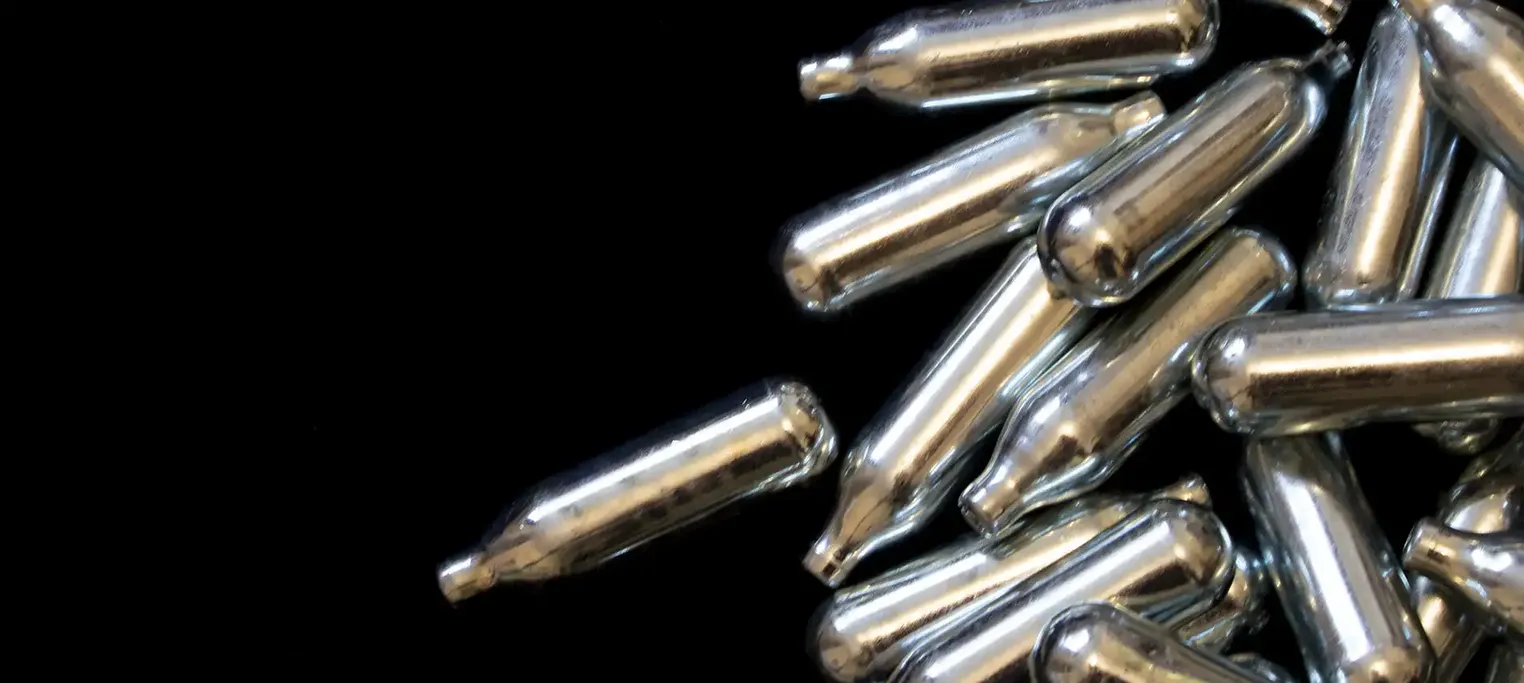
Recently, there has been growing attention in the media on the use of nitrous oxide, also known as ‘nangs’ or ‘laughing gas’.1, 2
While many people try nitrous oxide without experiencing harm, its popularity raises concerns around the potential health, environmental, and social impacts across Australia.1,3
Here, we look at how nitrous oxide is used, the harms it can cause and how they can be reduced.
What is nitrous oxide?
Nitrous oxide is a gas used for sedation and pain relief.4 It’s listed by the World Health Organization (WHO) as an essential medicine.
It’s a dissociative drug, meaning it causes people to feel separated or detached from their body or physical environment.
Nitrous oxide has a range of legal uses, including:
- anaesthesia at the dentist
- as a propellant for whipping cream
- increasing car engine performance for auto racing (known as NOS).1,4-6
Nitrous oxide is also sometimes used illicitly by people to get ‘high’.1,4,6
The gas is inhaled, usually by releasing nitrous gas cartridges (bulbs or whippets) into another object, such as a balloon.
Effects include increased laughing and sedation – felt almost immediately and lasting for a few minutes.1,7
Visit our Drug Facts page to find out more.
How common is nitrous oxide use?
In Australia:
The National Drug Strategy Household Survey found:
- 1.4% of Australians aged 14 and over had used inhalants in the last year (2022-2023).
- Nitrous oxide was the second most common type of inhalant used, behind alkyl nitrites/amyl.
- Students were the group that most frequently used nitrous oxide – an insight also found in international research.1-3, 6, 8
Internationally:
The Global Drug Survey found around one in five people had tried nitrous oxide at least once, and around one in ten had used it in the past year.9
What are the harms of nitrous oxide (nangs)?
For most people, occasional use of nitrous oxide does not result in any long-term harms.4, 10
But it can come with serious health risks.2, 10, 11
Immediate risks include cold burns to the hands, lips and throat as nitrous oxide gas is very cold (-40C degrees), as well as injuries from faulty gas dispensers exploding.12, 13
Deaths have also occurred, due to:
- suffocation from placing bags or containers over face while using
- fatal injuries, such as falls and car crashes, when people have been affected by nitrous oxide.2, 6
There’s also been some reports of sudden deaths after inhaling nitrous oxide, possibly from heart attacks or other medical emergencies.6
The long-term, frequent use (dependence) of nitrous oxide can cause:
- heart and lung issues
- mental health problems
- vitamin B12 deficiency.2, 6, 11
Nitrous oxide and dependence
People who are dependent on nitrous oxide may feel like they need to use it to get through their day, or enjoy usual activities like going out or socialising.2
Those most at risk of developing dependence on nitrous oxide are people experiencing mental ill health, as well as people who are more socially isolated. For example, international students or people who are unemployed.2, 11, 14, 15
Community mental health and alcohol and other drug services play an important role in supporting both the early identification and treatment for nitrous oxide use, particularly when it happens alongside other substances (polydrug use).11
If you’re looking for support and treatment options, there are links below that can help.
Nitrous oxide and vitamin B12
People who consume large amounts of nitrous oxide are at risk of developing vitamin B12 deficiency.2, 10, 11, 16
Vitamin B12 is an essential vitamin found in foods like dairy, meat, and fish.2
It’s needed for healthy nerve function and for making DNA.2
A serious long term health complication of vitamin B12 deficiency is spinal cord damage.2, 6, 16-18
People who already have low vitamin B12 are at higher risk of this developing this condition after using nitrous oxide. As are people with digestive issues such as Crohn’s disease or pernicious anaemia, or those with diets low in B12 (including vegans and vegetarians).2, 6
The condition can cause:
- nerve damage, mainly in the spinal cord (neurotoxicity)
- altered mental state (psychosis, hallucinations, mood disturbances)
- weakness in arms and legs
- trouble walking
- muscle twitching
- difficulty controlling bladder and bowels
- sexual dysfunction.2, 6, 14
Treatment involves injections of vitamin B12. Most people who receive treatment will make a full recovery, but some people can have permanent damage.2, 6, 16, 18
How can governments reduce harm from nitrous oxide?
Harm reduction strategies include supporting safer use, preventing harm where possible, and making sure people have access to timely and accurate information and care.19
Many countries have introduced measures to limit the availability of nitrous oxide and to deliver targeted health education.6
In Australia, some state governments have also made changes to the law.20
In 2024, Western Australia (WA) introduced legislation banning the purchase of nitrous oxide for non-legitimate uses.21
Access to small 10-gram nitrous oxide canisters (‘nangs’) in WA is limited to:
- registered food businesses
- licensed venues that prepare alcoholic drinks on-site
- educational and training institutions
- cooking schools.21
Suppliers must verify that nitrous oxide canisters are sold only to approved food or beverage businesses, while purchasers will need to provide proof they are authorised to buy them.21
In Queensland, police now have the power to seize nitrous oxide cannisters found alongside illicit tobacco or nicotine products (such as vapes).22
In Victoria and South Australia it’s illegal to sell nitrous oxide if the person selling it knows, or should reasonably know, that it will be inhaled or given to another person to inhale.23, 24
SA has also made it illegal to sell nitrous oxide to someone under the age of 18 (unless it’s for their work).24
What else can be done to regulate nangs?
Two major European reports providing recommendations on nitrous oxide have been released in recent years:
- The European Union Drugs Agency (EUDA) report on nitrous oxide use in Europe.2
- The UK’s Advisory Council on the Misuse of Drugs (ACMD) nitrous oxide harms assessment.6
Some of the policy recommendations include:
- limiting how many cartridges can be sold at once
- restricting online direct-to-customer sales
- setting age limits for sales and requiring age checks in shops and online
- preventing sales during certain hours, such as between 10pm and 5am
- restricting the sale of large cannister sizes not intended for legitimate use
- banning sales in bars, clubs, and shops that sell alcohol, tobacco, or vapes.2, 6
The ACMD also reports that criminalising nitrous oxide use would be an inappropriate response to the level of harm it causes.6, 11
Criminal penalties for drug use often increase disadvantage, creating long-term barriers to employment, education, and housing for people.25
The UK Government hasn’t followed the AMCD recommendation, and in 2023, made it illegal to possess nitrous oxide if police believe it will be used to get ‘high’.26
How can communities work together to reduce harm?
Communities can share clear, evidence-based information about nitrous oxide and offer practical harm reduction advice.2, 10, 11, 20
Nitrous oxide is not a drug exclusively used by young people and harms can be experienced by people of any age.1, 2
But, young people are the group most likely to use nitrous oxide. So, it’s important not to normalise or unintentionally promote its use.1-3, 6, 8, 20
Information needs to be easy for young people to understand. It should give clear guidance for people who use nitrous oxide, as well as for their parents and carers, on safety and where to find help.2, 20
It can also be more effective to run targeted campaigns in locations where use of nitrous oxide may be more common (such as festivals), rather than broad awareness campaigns.1, 2
Harm reduction advice for nitrous oxide (nangs) use
There are ways to reduce the risks of harm from using nitrous oxide:
- To reduce the risk of frostbite/cold burns:
- Always dispense the gas into a balloon or canister before inhaling
- Use different crackers (gas dispenser), as devices become very cold if used multiple times in a row.
- Use nangs that fill only one balloon instead of large tanks, as they’ve been linked to increased risk of frost burn, explosions, and nitrous oxide dependence.
- Check for visible damage to gas tanks (including hoses)/dispensers before using them, as faulty tanks/dispensers can explode.
- Keep your face uncovered and make sure you can breathe freely. Blocking your face/breathing can lead to suffocation.
- Take regular breaks and breathe in fresh air.
- Use in well-ventilated spaces with open doors/windows.
- Keep away from flames - including lit cigarettes, as nitrous oxide is highly flammable.
- Stay seated when using - to avoid falling and injuring yourself if you faint.
- Avoid exercise or physical activity immediately after use – to reduce risk of heart failure or lung injury.
- Don’t use alone. Make sure that you’re with trusted friends who can help if something goes wrong.
- Avoid use if you’re planning to conceive or pregnant.
- Don’t operate machinery, drive, or swim.2, 6, 12, 27, 28
For more harm reduction information:
If you’re worried about someone’s use of nitrous oxide, a good place to start is having a non-judgemental conversation with them.
These resources can help with knowing what to say:
Getting help for nangs use
If your use of nitrous oxide is affecting your health, family, relationships, work, school, financial or other life situations, or you’re concerned about someone, there is help and support.
- Call the National Alcohol and Other Drug Hotline on 1800 250 015 for free and confidential advice, information and counselling about alcohol and other drugs
- Use the Path2Help portal to get matched with information and services specific to your needs.
- Search our Help and Support directory to find your preferred support, by adding your location or postcode and filtering by service type.
- Allan J, Cameron J, Bruno J. A Systematic Review of Recreational Nitrous Oxide Use: Implications for Policy, Service Delivery and Individuals. International Journal of Environmental Research and Public Health [Internet]. 2022. [cited 2025 Oct 20];19(18).
- European Monitoring Centre for Drugs and Drug Addiction. Recreational use of nitrous oxide: a growing concern for Europe. [Internet]. Publications Office of the European Union, Luxembourg; 2022. [cited 2025 Oct 28]
- Sutherland R, Karlsson A, Uporova J, Palmer L, Tayeb H, Chrzanowska A, et al. Australian Drug Trends 2025: Key Findings from the National Ecstasy and Related Drugs Reporting System (EDRS) Interviews. [Internet]. Sydney: National Drug and Alcohol Research Centre, UNSW. 2025. [cited 2025 Nov 03]
- Ferreira PM, Winstock AR, Schlag AK, Brandner B, Henderson G, Miller I, et al. A comparative study of the harms of nitrous oxide and poppers using the MCDA approach. Drug Science, Policy and Law [Internet]. 2022. [cited 2025 Oct 28];8.
- Bahji A, Bach P, Danilewitz M, Crockford D, el-Guebaly N, Devoe DJ, et al. Comparative efficacy and safety of pharmacotherapies for alcohol withdrawal: a systematic review and network meta-analysis. Addiction [Internet]. 2022. [cited 2025 Oct 06];117(10):2591–601.
- Advisory Council on the Misuse of Drugs. Research and analysis Nitrous oxide: updated harms assessment (accessible). [Internet]. GOV.UK; 2023. [cited 2025 Oct 28]
- Xiang Y, Li L, Ma X, Li S, Xue Y, Yan P, et al. Recreational nitrous oxide abuse: prevalence, neurotoxicity, and treatment. Neurotoxicity Research : Neurodegeneration, Neuroregeneration, Neurotrophic Action, and Neuroprotection [Internet]. 2021. [cited 2025 May 20];39(3):975–85.
- Australian Institute of Health and Welfare. National Drug Strategy Household Survey 2022–2023: Low-prevalence illicit drugs in the NDSHS. [Internet]. Canberra: AIHW; 2024. [cited 2025 Nov 03]
- AR W, Maier LJ, Zhuparris A, Davies E, Puljevic C, Kuypers KPC, et al. Global Drug Survey (GDS) 2021 Key Findings Report. [Internet]. London; 2021. [cited 2025 Nov 03]
- Winstock AR, Ferris JA. Nitrous oxide causes peripheral neuropathy in a dose dependent manner among recreational users. Journal of Psychopharmacology (Oxford, England) [Internet]. 2020. [cited 2025 Oct 23];34(2):229–36. doi: 10.1177/0269881119882532.
- Zaloum SA, Mair D, Paris A, Smith LJ, Patyjewicz M, Onen BL, et al. Tackling the growing burden of nitrous oxide-induced public health harms. The Lancet Public Health [Internet]. 2025. [cited 2025 Oct 30];10(3):e257–e63. doi: 10.1016/S2468-2667(24)00298-6.
- Hi-Ground. Nitrous Oxide. [Internet]. [cited 2025 May 06]
- Harm Reduction Victoria. Nangs. [Internet]. [cited 2025 Nov 26]
- Redmond J, Cruse B, Kiers L. Nitrous oxide-induced neurological disorders: an increasing public health concern. Internal Medicine Journal [Internet]. 2022. [cited 2025 Oct 28];52(5):740–4.
- Paris A, Mair D, Zaloum S, Onen B, Noyce AJ. Nitrous oxide and its neurological harms. The Lancet Neurology [Internet]. 2023. [cited 2025 Oct 30];22(10):882.
- Mair D, Paris A, Zaloum SA, White LM, Dodd KC, Englezou C, et al. Nitrous oxide-induced myeloneuropathy: a case series. Journal of Neurology, Neurosurgery, and Psychiatry [Internet]. 2023. [cited 2025 Oct 30];94(9):681–8.
- Marsden P, Sharma AA, Rotella J-A. Review article: Clinical manifestations and outcomes of chronic nitrous oxide misuse: A systematic review. Emergency Medicine Australasia : EMA [Internet]. 2022. [cited 2025 Oct 28];34(4):492–503.
- Chiew AL, Raubenheimer JE, Berling I, Buckley NA, Becker T, Chan B, et al. Just 'nanging' around - harmful nitrous oxide use: a retrospective case series and review of Internet searches, social media posts and the coroner's database. Internal Medicine Journal [Internet]. 2022. [cited 2025 Oct 30];52(10):1724–32.
- Harm Reduction Australia. What is Harm Reduction? [Internet]. 2025. [cited 2025 Nov 07]
- Gresham S, Raubenheimer JE. Current regulations in context: Scraping Australia's online nitrous oxide market. International Journal of Drug Policy [Internet]. 2025. [cited 2025 Nov 26];139.
- Government of Western Australia Department of Health. Tougher nitrous oxide regulation now in effect. [Internet]. 2024. [cited 2025 Nov 07]
- Queensland Government. Nation-leading laws strengthened to target rogue tobacco and vape traders. [Internet]. Queensland Government; 2025. [cited 2025 Nov 26]
- Victorian Department of Health. Responsible sale of solvents. [Internet]. 2025. [cited 2025 Nov 07]
- Legal Services Commission of South Australia. Sale or supply of volatile solvents. [Internet]. 2020. [cited 2025 Nov 07]
- Global Commission on Drug Policy. Advancing Drug Policy Reform: A New Approach to Decriminalization. [Internet]. Geneva, Switzerland; 2016. [cited 2025 Nov 13]
- GOV.UK. Nitrous oxide ban: guidance. [Internet]. 2023. [cited 2025 Nov 07]
- Quax MLJ, Van Der Steenhoven TJ, Antonius Bronkhorst MWG, Emmink BL. Frostbite injury: an unknown risk when using nitrous oxide as a party drug. Acta Chirurgica Belgica [Internet]. 2022. [cited 2025 Oct 06];122(2):140–3.
- Energy Safe Victoria. Know the drill before you grill. [Internet]. 2024. [cited 2025 Sep 9]