November 21, 2025
International Human Rights Day
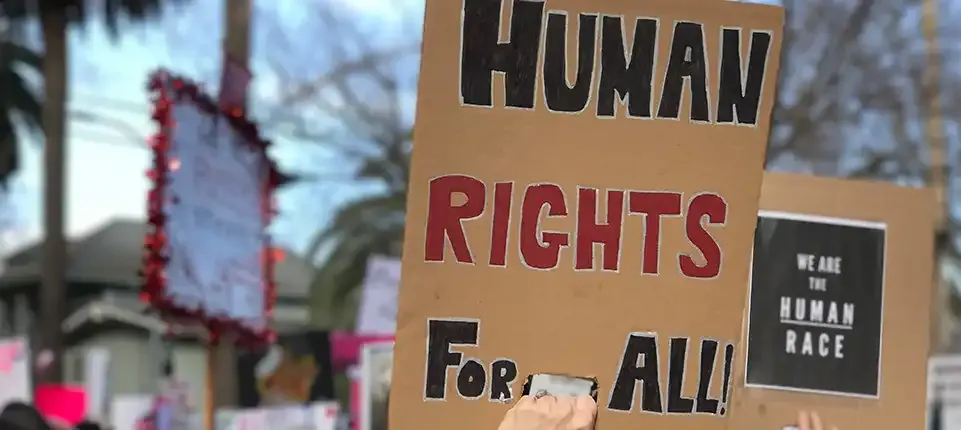
International Human Rights Day occurs every year on December 10. It marks the anniversary of the Universal Declaration of Human Rights (UDHR), and is a time to reflect and take action on the protection of human rights globally.1
The theme for this year is: ‘Our everyday essentials’, emphasising that human rights are positive, essential and attainable.
Here, we look at drug policy and human rights, ahead of International Human Rights Day.
What are human rights?
Human rights are the basic freedoms and protections that belong to every person.
They are based on the principles of dignity, equality, and mutual respect.
Human rights are universal and interdependent, meaning:
- everyone is entitled to them from birth - they aren’t granted by governments
- one set of rights can’t be fully enjoyed without the others.2
Drug policy is a human rights issue
In 1948, the United Nations General Assembly adopted the UDHR. This was a milestone document that sets out basic human rights to be universally protected.1
The UDHR has been translated into more than 500 languages – making it the most translated document in the world.3
Every four years, since 2006, the UN reviews the human rights records of all its 193 member states.3
While some progress has been made, many human rights for people who use drugs continue to be violated.
The right to life
Everyone has the right to life.
But many countries around the world still have the death penalty for drug-related offences.4
Under international human rights law, the death penalty can only be used for the ‘most serious crimes’ - and drug offences don’t fall into this category.5
In 2024, 40% of all known executions were for drug offences, with 615 people executed and a further 2,300 people awaiting execution.
This number has been increasing in recent years, and is likely to be much higher, as many countries don’t publicly report their execution data.4
There’s no strong evidence that the death penalty works to reduce drug production, trade and use.4
Rather, it causes significant suffering and grief for the accused person and their family – often disproportionately impacting women, people born overseas, and members of ethnic minorities.4
The right to health and adequate standard of living
Everyone has the right to a standard of living that meets their health and wellbeing needs. This includes access to medical care and social services.6
But people who use drugs don’t always get access to necessary health or social services, often due to stigma.7,8
People who use drugs face high levels of stigma. In fact, the World Health Organization has ranked illicit drug dependence as the most stigmatised health condition globally.9
In health care settings this can mean people receive:
- sub-standard care
- denial of care
- longer waiting times for treatment
- physical or verbal abuse.10,11
This can delay or stop people from seeking help when they need it.
And when people do seek help, they may not be entirely honest about their drug use – downplaying it or only sharing certain information - out of fear of being treated differently.
People who use drugs also lack access to health care because some life-saving services, such as drug checking (pill testing) or Medically Supervised Injecting Rooms (MSIRs), aren’t located where they’re needed.7, 8
People in prison with a drug dependence also face barriers to health care, with no Needle and Syringe Programs available, and limited access to continuous treatment and medications (such as pharmacotherapy).12-14
Right to liberty (freedom)
No one should be unnecessarily arrested or detained, as this violates a person’s right to freedom.6
But people who use drugs continue to be punished for minor use and possession offences.7
Having a criminal record can create barriers to getting a job and accessing necessary services, such as housing and treatment.15,16
This can affect a person’s ability to enjoy the right to an adequate standard of living.
Right to equality and non-discrimination
Everyone is entitled to the same human rights and fair and equal treatment, regardless of race, colour, sex, language, religion, political opinion, or any other background or status.6
But drug criminalisation affects some groups more than others.
In Australia, drug laws disproportionately impact:
- people from lower socio-economic backgrounds
- non-white communities
- First Nations peoples.15,16
Right to benefit from scientific progress
We all have the right to benefit from scientific evidence.5
But treatments for alcohol and other drug dependence aren’t always evidence-based. This includes involuntary treatment, which can cause further physical or psychological harm and infringe a person’s right to freedom.17-19
Other evidence-based interventions to prevent overdoses, such as drug checking or MSIRs, also remain inaccessible for many people.
The illegal status of some drugs means many people can’t take them for medical purposes, even if there’s evidence behind their use. This has led Australia to make changes in recent years around access to cannabis (THC), psilocybin (magic mushrooms) and MDMA for certain health conditions.
Right to freedom of religion, and enjoyment of cultural life
Everyone has the right to freely practice their spiritual beliefs and enjoy cultural life.6
But for some Indigenous populations, drug laws can impact their ability to do so.
Certain drugs, like cannabis (THC), psychedelics (including psilocybin and ayahuasca) and stimulants (khat, coca leaf) have been used for centuries by some Indigenous peoples in traditional cultural and religious ceremonies, and as sacred medicines.20-23
Criminalising these substances can undermine Indigenous knowledge and lead to further unequal treatment.21
Protecting human rights
The anniversary of the Universal Declaration of Human Rights (UDHR) is an opportunity to reflect on progress that has been made, as well as the changes that are still needed to ensure people who use drugs have their human rights respected.
Campaigns such as Support. Don’t Punish continue to advocate for drug policies that focus on health and human rights.
While in 2023, UN experts called for the urgent decriminalisation of drug use and possession, to better protect human rights around the world.20
Human rights in Australia
The Australian Human Rights Commission (AHRC) monitors Australia’s performance against its international human rights commitments by:
- receiving and investigating human rights and discrimination complaints
- advocating to government for human rights to be considered in laws and policy making
- providing advice, reviewing laws and making submissions to parliamentary inquiries
- researching human rights and discrimination issues
- promoting and raising awareness of human rights through education and training, events and discussion, media outreach, digital resources and social media.
The AHRC is independent to the government, and has the power to enforce human rights in Australia through a conciliation process.
Some states and territories also have their own human rights laws and commissions:
- ACT Human Rights Commission
- Queensland Human Rights Commission
- Victorian Equal Opportunity & Human Rights Commission.
Australian drug laws and human rights
Australian drug laws were created long before the UDHR or other human rights acts and charters were introduced, meaning many have never been reviewed in the context of human rights.24
But recent changes in Australia highlight a positive shift towards human rights-centred drug policy, including:
- decriminalisation of drug use and possession in the ACT
- restricted medical access to psilocybin and MDMA
- delivery of Medical Supervised Injecting Rooms in Sydney and Melbourne
- decriminalisation of public drunkenness in Victoria
- expansion of the national Take home Naloxone program
- drug checking (pill testing) in the ACT, Victoria and NSW.
These health-based approaches recognise the value of everyone’s lives, their dignity, and their right to access health care – regardless of their use of alcohol or other drugs.
Find out more
- United Nations. Human Rights Day 10 December. 2025 [06.11.2025].
- The Office of the High Commissioner for Human Rights. What are human rights? : United Nations; 2025 [06.11.2025].
- United Nations. Human Rights. 2025 [14.11.2025].
- Girelli G, Larasati A. The Death Penalty for Drug Offences: Global Overview 2021. [Internet]. 2022 [06.11.2025]:[43 p.].
- United Nations Development Programme and The International Centre on Human Rights and Drug Policy. International guidelines on human rights and drug policy. [Internet]. 2019 [06.11.2025]:[27 p.].
- United Nations General Assembly. Universal Declaration of Human Rights. 1948 [06.11.2025].
- Csete J, Kamarulzaman A, Kazatchkine M, Altice F, Balicki M, Buxton J, et al. Public Health and International Drug Policy. Lancet (London, England) [Internet]. 2016 [06.11.2025]; 387(10026):[1427–80 p.].
- Barrett D, Hannah J, Lines R. What Does it Mean to Adopt a Human Rights-Based Approach to Drug Policy? Health and human rights [Internet]. 2020 [06.11.2025]; 22(1):[355–7 p.].
- Room R. Stigma, social inequality and alcohol and drug use. Drug and Alcohol Review [Internet]. 2005 [06.11.2025]; 24(2):[143–55 p.].
- Nyblade L, Stockton MA, Giger K, Bond V, Ekstrand ML, Lean RM, et al. Stigma in health facilities: why it matters and how we can change it. BMC Medicine [Internet]. 2019 [06.11.2025]; 17(1):[25 p.].
- Lloyd C. The Stigmatization of Problem Drug Users: A Narrative Literature Review. Drugs: Education, Prevention & Policy [Internet]. 2013 [06.11.2025]; 20(2):[85–95 p.].
- Australian Institute of Health and Welfare. Health of people in prison. 2022 [06.11.2025].
- Young JT, Heffernan E, Borschmann R, Ogloff JRP, Spittal MJ, Kouyoumdjian FG, et al. Dual diagnosis of mental illness and substance use disorder and injury in adults recently released from prison: a prospective cohort study. The Lancet Public Health [Internet]. 2018 [06.11.2025]; 3(5):[e237–e48 p.].
- Paterson A. Needle and Syringe Programs in Prisons: Victoria's "Problematic" Policy Position. Journal of law and medicine [Internet]. 2022 [06.11.2025]; 29(1):[67–84 p.].
- Law Reform Road and Community Safety Committee. Inquiry into drug law reform: Parliament of Victoria; 2018 [06.11.2025].
- The Cabinet Office NSW Government. Special Commission of Inquiry into the Drug 'Ice'. 2020 [06.11.2025].
- Pilarinos A, Barker B, Nosova E, Milloy MJ, Hayashi K, Wood E, et al. Coercion into addiction treatment and subsequent substance use patterns among people who use illicit drugs in Vancouver, Canada. Addiction [Internet]. 2020 [06.11.2025]; 115(1):[97–106 p.].
- Werb D, Kamarulzaman A, Meacham MC, Rafful C, Fischer B, Strathdee SA, et al. The effectiveness of compulsory drug treatment: A systematic review. International Journal of Drug Policy [Internet]. 2016 [06.11.2025]; 28:[1–9 p.].
- Chase J. The Ethics of Compulsory Treatment of Addictions Under Canadian Legislation: Restricting Freedom to Promote Long-Term Autonomy? Canadian Journal of Addiction [Internet]. 2020 [06.11.2025]; 11(1):[6–13 p.].
- The Office of the High Commissioner for Human Rights. UN experts call for end to global ‘war on drugs’. 2023 [06.11.2025].
- Ens A. Silencing indigenous pasts: critical Indigenous theory and the history of psychedelics. International Journal of Qualitative Studies in Education [Internet]. 2021 [06.11.2025]; 34(10):[904–14 p.].
- Hauskeller C, Artinian T, Fiske A, Schwarz Marin E, González Romero OS, Luna LE, et al. Decolonization is a metaphor towards a different ethic. The case from psychedelic studies. Interdisciplinary Science Reviews [Internet]. 2022 [06.11.2025]:[1–20 p.].
- Penn A, Dorsen CG, Hope S, Rosa WE. Psychedelic-Assisted Therapy: Emerging Treatments in Mental Health Disorders. The American journal of nursing [Internet]. 2021 [06.11.2025]; 121(6):[34–40 p.].
- Seear K, Mulcahy S. Human rights and drug policy: Summary report of project findings and recommendations. [Internet]. 2025 [06.11.2025]:[82 p.].